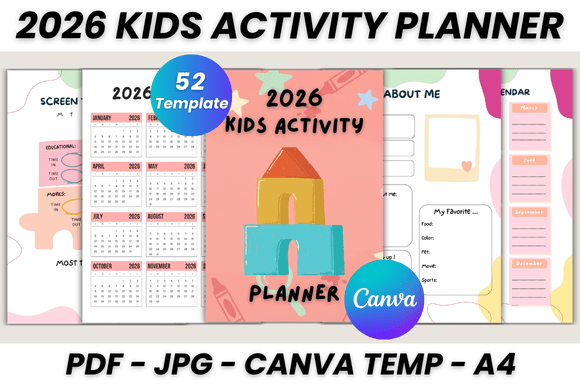
2026 Kids Activity Planner Canva: A Design-Centric Approach to Family Organization
As we approach the new year, the challenge for creative professionals and busy parents alike is finding tools that bridge the gap between aesthetic appeal and functional utility. The 2026 Kids Activity Planner Canva template represents a shift in how we approach family management—it’s not just a calendar; it’s a comprehensive design asset. For graphic designers, brand strategists, and content creators, this planner offers a unique opportunity to see how modern typography and layout principles can be applied to the chaotic world of parenting and child development. It moves beyond the standard grid, utilizing a sans serif font approach that prioritizes clarity while maintaining a playful, approachable brand identity.
Visual Hierarchy and Layout Strategy
One of the standout features of the 2026 Kids Activity Planner Canva is its sophisticated use of visual hierarchy. In editorial design, the way information is structured determines how effectively it is consumed. This planner uses a clean, modern aesthetic that balances white space with structured content blocks. You won't find cluttered pages here; instead, the design relies on a strong grid system that supports both the weekly planner spreads and the more creative sections like the Memory Collage or Gratitude Journal. The typography choices—a blend of readable body text and engaging headers—demonstrate how a premium font pairing can elevate a functional document into something families actually want to use. It’s a masterclass in how web design principles (like card layouts and clear navigation) translate beautifully into print design.
Beyond the Calendar: The 52-Page Ecosystem
The true value of this product lies in its comprehensive scope. It isn't just a date tracker; it's a 52-page ecosystem designed to foster responsibility and creativity. Consider the practical applications for the modern creative entrepreneur:
- Brand Consistency: For those selling digital products, this template serves as a case study in consistency. From the Birthday Calendar to the Screen Time Tracker, the design language remains uniform, teaching a valuable lesson in brand identity.
- User Experience (UX): The inclusion of specific pages like "I Am Responsible! My Weekly Routine" and "Back to School" shows a deep understanding of the user's journey. It anticipates needs—similar to how a UX designer maps out a customer flow.
- Content Versatility: The 2026 Kids Activity Planner Canva file is fully editable. This means you can adapt the creative font choices or color palettes to match your own packaging design or social media graphics if you are repurposing it for a client project.
Practical Application for Creatives and Parents
For the audience of designers and marketers, the utility of the 2026 Kids Activity Planner Canva extends into how we manage our own creative businesses while raising children. The 30 Days Challenge and Habit Tracker pages are excellent tools for personal development, not just for kids. You can use the editable files to track client projects, invoice dates, or content calendars. The flexibility of the Canva platform means you are not locked into a static PDF; you can manipulate the typeface sizing, swap out script fonts for handwritten fonts, or adjust the layout of the Monthly Planner to suit your specific workflow.
The "About Me" and Emotional Intelligence Sections
It is rare to find a commercial font application that focuses on emotional intelligence, yet this planner dedicates space to it. Pages like "5 Things That I Like About Myself" and "I Am Feeling" are critical for child development. From a design perspective, these pages often utilize softer, more organic shapes and perhaps a script font to evoke a sense of intimacy and safety. This demonstrates the power of modern typography—using a serif font or a rounded sans serif to change the emotional tone of the page. It proves that design isn't just about looking good; it's about facilitating a feeling.
Technical Flexibility and Customization
The requirement of a free Canva account is a low barrier to entry, making this design asset accessible to everyone from professional graphic designers to hobbyist crafters. However, for the professional user, the ability to dive into the layers of this template is where the magic happens. You can analyze how the creator built the School Schedule or the Vacation Notes layout. You can see the specific kerning and leading choices made for the body copy.
Furthermore, the transition from digital to physical is seamless. Whether you are printing the 2026 Calendar for a family command center or exporting the Reading List for a digital tablet, the resolution and layout hold up. The inclusion of niche pages like "New Country" or "First Day Of New Home" adds a layer of personalization that generic planners lack. It acknowledges that life is dynamic and that our organizational tools need to be just as flexible as our logo design concepts or marketing strategies.
Final Thoughts on the 2026 Kids Activity Planner Canva
In a market saturated with generic templates, the 2026 Kids Activity Planner Canva stands out because it treats organization as a creative endeavor. It respects the intelligence of both the parent and the child. For the creative professional, it is a reminder that good design is functional design. Whether you are using it to manage your household, teaching a young one about responsibility through the Cleaning Checklist, or simply studying the layout for your next client pitch, this planner offers a robust, visually appealing solution. It proves that with the right design assets, even the mundane task of planning becomes an act of creativity.